Table of Contents
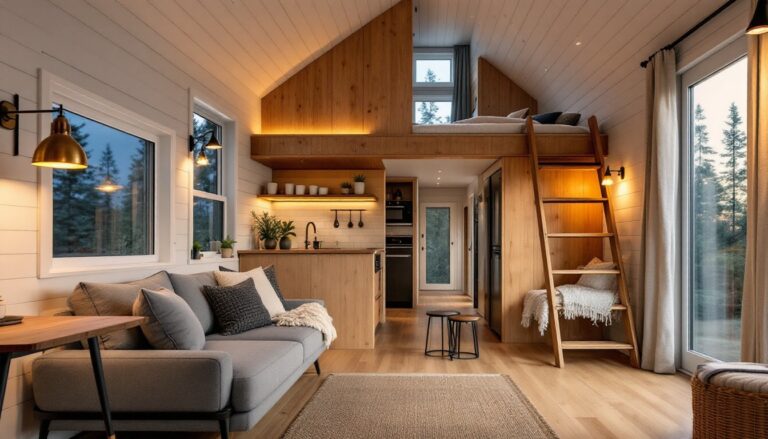
ToggleGoing vertical in a tiny house isn’t just about adding square footage, it’s about rethinking how every cubic foot works. A two-story layout doubles usable living space without expanding the footprint, making it a smart move for anyone building on a tight lot or prioritizing mobility. But stacking levels introduces real challenges: stairs eat floor space, headroom gets tight, and poor planning can leave the upper level feeling like a glorified crawl space. Done right, though, a two-story tiny house offers distinct zones for sleeping, working, and living, without the claustrophobia that comes with cramming everything onto one floor.
Key Takeaways
- A two-story tiny house interior doubles usable living space without expanding the footprint, creating distinct zones for sleeping, working, and entertaining while staying within height restrictions like the 13.5-foot road-legal trailer limit.
- Ground floor design must prioritize multifunctional furniture—Murphy beds, convertible sofas, and fold-away tables—paired with efficient galley kitchens using 24-inch-deep cabinets and apartment-sized appliances to maximize usable floor area.
- Upper level loft bedrooms require at least 3.5–4 feet of headroom above the mattress for livability, skylights for natural light, and built-in storage solutions to avoid a cramped, cave-like feeling.
- Staircase placement is critical: plan for 9–11 feet of horizontal run, integrate storage drawers or cabinets into the staircase structure, and ensure proper handrails, non-slip surfaces, and recessed LED lighting for safety.
- Smart storage strategies—including stair risers with drawers, under-loft closets, and floor-to-ceiling wall shelving—turn dead space into functional storage, essential for maintaining organization in tight quarters.
- Light color palettes, consistent flooring throughout both levels, mirrors opposite windows, and layered lighting create visual continuity and make the two-story tiny house interior feel larger and less claustrophobic.
Why Choose a Two-Story Tiny House Layout?
A two-story design solves the biggest problem in tiny living: lack of separation. Single-level tiny homes force every activity, cooking, sleeping, working, into one continuous space. Adding a second story creates dedicated zones. The ground floor handles high-traffic activities like cooking and entertaining, while the upper level provides privacy for sleeping or focused work.
Vertical layouts also improve natural light distribution. Windows on both levels allow cross-ventilation and daylight to reach deeper into the home, reducing reliance on artificial lighting. In many jurisdictions, a two-story tiny house can stay under maximum height restrictions (typically 13.5 feet for road-legal trailers) while still offering 200–400 square feet of total living area.
There are tradeoffs. Two-story designs require more complex framing, additional load considerations for the upper floor, and careful attention to headroom. Minimum ceiling height for habitable rooms is typically 6 feet 8 inches under the International Residential Code (IRC), though lofts used solely for sleeping may have lower clearances. Stairs or ladders also consume 12–25 square feet of floor space, a significant chunk in a tiny home. Still, for those who value privacy and defined living zones, the vertical approach beats cramming everything into a single plane.
Designing Your Ground Floor: Living Spaces That Work Hard
The ground floor does the heavy lifting in a two-story tiny house. This is where daily routines happen: meal prep, dining, entertaining, and daytime lounging. The key is multifunctional furniture and tight spatial planning.
Start with a living area that doubles as a workspace or guest zone. A fold-down Murphy bed or a convertible sofa keeps the floor open during the day. Built-in seating with storage underneath, think bench-style seating along one wall, eliminates the need for bulky chairs. Pair it with a narrow console or drop-leaf table that folds flat when not in use.
Creating a Functional Kitchen and Dining Area
Kitchens in tiny homes demand efficiency. A galley layout works best: two parallel counters with a 36–42 inch walkway between them. Use 24-inch-deep base cabinets instead of standard 30-inch to save floor space without sacrificing storage. Apartment-sized appliances, 18-inch dishwashers, 20-inch ranges, and counter-depth refrigerators, fit the scale better than full-size units.
Cooking zones need adequate prep space. Aim for at least 15 inches of counter on either side of the cooktop, and 24 inches near the sink. If counter space is tight, add a fold-out cutting board or a slide-out extension. Many small space living ideas emphasize vertical storage: open shelving, magnetic knife strips, and hanging pot racks free up counter real estate.
Dining areas often overlap with kitchen or living zones. A wall-mounted drop-leaf table seats two to four people and folds down to just 6 inches when not in use. Alternatively, a narrow breakfast bar with stools tucked underneath serves double duty as a prep surface and eating area. Avoid freestanding dining tables unless the floor plan genuinely allows it, they’re space hogs.
Upper Level Design: Loft Bedrooms and Private Retreats
Loft bedrooms are the hallmark of two-story tiny homes, but they’re not all created equal. A cramped loft with 3 feet of headroom feels like a bunk, not a bedroom. Aim for at least 3.5–4 feet of clearance above the mattress, enough to sit upright and move around without stooping.
Standard mattress sizes matter here. A queen mattress measures 60 × 80 inches: add 6–12 inches of clearance on each side for bedding and movement, and the loft footprint needs to be at least 72 × 92 inches. Full-size mattresses (54 × 75 inches) fit tighter spaces but still require side access.
Loft design isn’t just about the bed. Built-in shelving along one wall, wall-mounted reading lights, and small nightstands (even just a narrow ledge) make the space livable. Skylights or gable-end windows are critical, lofts without natural light feel like caves. Many builders include a 14 × 30 inch skylight or larger to bring in daylight and improve ventilation.
If the upper level has enough headroom (6 feet 8 inches or more), consider framing it as a true second floor rather than a loft. This allows for a bathroom, closet, or even a small office nook. Load-bearing requirements change: the floor joists need to support 40 pounds per square foot (live load) per IRC standards for sleeping areas, so use 2×6 or 2×8 joists spaced 16 inches on center, depending on span and species. Consult an engineer if you’re uncertain, undersized framing is a safety risk.
Smart Storage Solutions for Two-Story Tiny Homes
Storage in a two-story tiny house isn’t an afterthought, it’s structural. Every vertical inch counts, and dead space is the enemy.
Stair storage is the most obvious opportunity. Drawers built into stair risers, cabinets underneath the staircase, or even fold-out compartments in the treads themselves turn circulation space into usable storage. Each step can hold a drawer roughly 10–12 inches deep, perfect for shoes, linens, or pantry overflow.
Under-loft storage is another goldmine. The area beneath a sleeping loft often goes unused, but it’s ideal for closets, shelving, or even a compact bathroom. Use the 6-foot-8-inch minimum ceiling height to your advantage: anything below that can be dedicated storage or mechanical space.
Vertical wall storage, floor-to-ceiling shelving, pegboards, and wall-mounted cabinets, keeps belongings off the floor. In kitchens, upper cabinets can extend to the ceiling (install a step stool for access). In bedrooms, floating shelves or wall-mounted wardrobes replace bulky dressers. Simple home organization tips like uniform bins and labeled containers help maintain order in tight quarters.
Don’t overlook furniture with hidden storage. Ottoman benches, beds with drawers underneath, and coffee tables with lift-tops all serve dual purposes. Measure carefully, furniture designed for standard homes often overwhelms tiny spaces.
Staircase Design: Balancing Safety, Style, and Space Efficiency
Stairs are the biggest spatial compromise in a two-story tiny house. They’re safer and more accessible than ladders, but they occupy precious floor area. Building codes (IRC) require stairs to have a minimum width of 36 inches, treads at least 10 inches deep, and risers no taller than 7.75 inches. Handrails are mandatory for stairs with four or more risers.
For a standard 8-foot ceiling height, expect 11–13 steps. At 10 inches per tread, that’s roughly 110–130 inches (9–11 feet) of horizontal run, manageable in a tiny house, but only if planned early. Alternating tread stairs (also called ship’s ladders or paddle stairs) cut the footprint nearly in half by staggering left and right treads, but they’re awkward to use and may not meet code in all jurisdictions. Check local building departments before committing.
Spiral staircases save space but are harder to navigate, especially while carrying laundry or furniture. They also have code restrictions: treads must provide at least 7.5 inches of depth at the narrow end and 10 inches at the walk line (12 inches from the center pole).
Storage integration is critical. Drawers, cabinets, or open cubbies built into the staircase reclaim some of the lost floor area. Use the space beneath the stairs for a closet, pantry, or even a compact washer/dryer stack.
Safety first: Install a solid handrail, non-slip tread surfaces, and adequate lighting. Recessed LED strips along the stair edge improve visibility without taking up space.
Interior Design Styles That Complement Vertical Living
Design style in a two-story tiny house isn’t just aesthetic, it’s functional. The right choices make small spaces feel larger and more cohesive.
Scandinavian and minimalist styles work well. Light wood tones, white or neutral walls, and uncluttered surfaces reflect natural light and create visual continuity between floors. Avoid heavy drapes or dark accent walls that chop up sightlines.
Industrial design, exposed beams, metal railings, open shelving, embraces the structural elements of a tiny home rather than trying to hide them. It’s honest and space-efficient. Just watch for visual clutter: too many exposed items can overwhelm a small footprint.
Modern farmhouse blends warmth with simplicity. Shiplap accent walls, wood plank ceilings, and matte black fixtures add character without bulk. Many budget home renovation stories highlight how paint and texture changes refresh tiny spaces affordably.
Regardless of style, stick to a consistent color palette. Two or three main colors plus one accent prevent visual fragmentation. Use the same flooring throughout both levels to enhance flow, luxury vinyl plank (LVP) or engineered hardwood in lighter shades performs well and resists moisture.
Mirrors, glass railings, and reflective surfaces amplify light and sightlines. A large mirror opposite a window effectively doubles the perceived natural light. Avoid heavy furniture, dark finishes, and busy patterns, they shrink space visually.
Lighting layering matters: recessed LEDs for general illumination, under-cabinet strips in the kitchen, and adjustable sconces in the loft create depth and flexibility without sacrificing headroom or floor space.