Table of Contents
ToggleCreating a cozy atmosphere in a tiny house isn’t about cramming décor into every corner, it’s about deliberate choices that make limited square footage feel warm, functional, and surprisingly spacious. Whether you’re building from scratch or retrofitting an existing tiny home, the difference between claustrophobic and inviting comes down to smart design decisions. This guide breaks down actionable strategies for layering comfort into small interiors, from layout planning to lighting tricks that punch above their weight.
Key Takeaways
- A cozy tiny house interior prioritizes experience optimization and sensory engagement over maximizing storage, with soft textiles, warm lighting, and proportional furniture creating an inviting atmosphere in limited square footage.
- Smart layout strategies like floating furniture 6–8 inches from walls, using half-height dividers (42–48 inches), and maintaining 18-inch circulation paths prevent claustrophobic feelings while preserving visual flow.
- Warm neutral color palettes (greige, soft taupes, off-whites) with consistent color temperatures throughout and accent walls painted in proportion to room size enhance coziness without overwhelming small spaces.
- Texture layering through area rugs, throw blankets, shiplap, and natural materials like live-edge shelving adds depth and visual interest while softening hard surfaces in a cozy tiny house interior.
- Multi-functional furniture such as storage ottomans, Murphy beds, and built-in window seats with hinged tops maximize floor space while maintaining daily comfort and reducing visual clutter.
- Layered lighting with warm 2700K bulbs, dimmable LED strips, and strategically placed wall sconces (60–66 inches from floor) creates an intimate, snug ambiance superior to relying on harsh single overhead fixtures.
Why Cozy Matters More Than Size in Tiny House Living
Square footage doesn’t dictate comfort, design intent does. A 200-square-foot tiny house can feel more inviting than a poorly planned 2,000-square-foot home if the space addresses human-scale needs: places to rest, adequate lighting, and visual warmth.
Cozy interiors compensate for limited floor space by engaging the senses. Soft textiles absorb sound and reduce echo in open-plan builds. Warm color temperatures (2700–3000K LED bulbs) mimic natural evening light and trigger relaxation responses. Proportional furniture keeps sightlines open, preventing the boxed-in feeling common in overloaded micro-homes.
Tiny house dwellers report higher satisfaction when interiors prioritize comfort over maximalist storage. A single plush reading chair often delivers more daily value than an extra cabinet crammed with seldom-used items. The goal is creating spaces people want to occupy, not just efficiently storing their belongings.
This mindset shift, from space optimization to experience optimization, drives every decision in the sections ahead. It’s why a well-placed lamp matters as much as an extra shelf, and why texture sometimes trumps additional square footage.
Smart Layout Strategies for Maximum Coziness
Zoning with sightlines in mind separates functional areas without physical walls that shrink perceived space. Use a 36-inch bookshelf as a room divider between sleeping and living zones, it provides storage while maintaining visual flow. Avoid floor-to-ceiling partitions: half-height dividers (42–48 inches) define areas without blocking light.
The 18-inch rule applies to circulation paths. Maintain at least 18 inches of clearance around furniture for comfortable movement. In galley-style kitchens, a 30-inch walkway between counters allows two people to pass without contact. Tighter than 24 inches feels congested during daily use.
Furniture float creates breathing room. Pull the sofa 6–8 inches away from the wall instead of pushing everything to the perimeter. This counterintuitive move adds depth and prevents the “shoved against the edges” look common in amateur tiny house layouts. Many design strategies for small dwellings emphasize this principle for better flow.
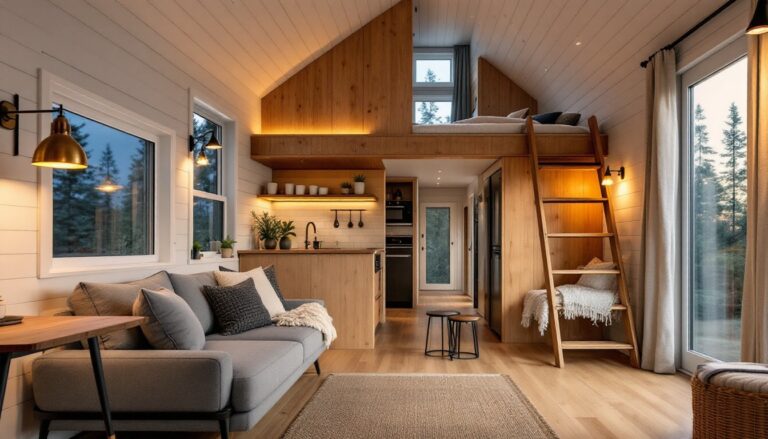
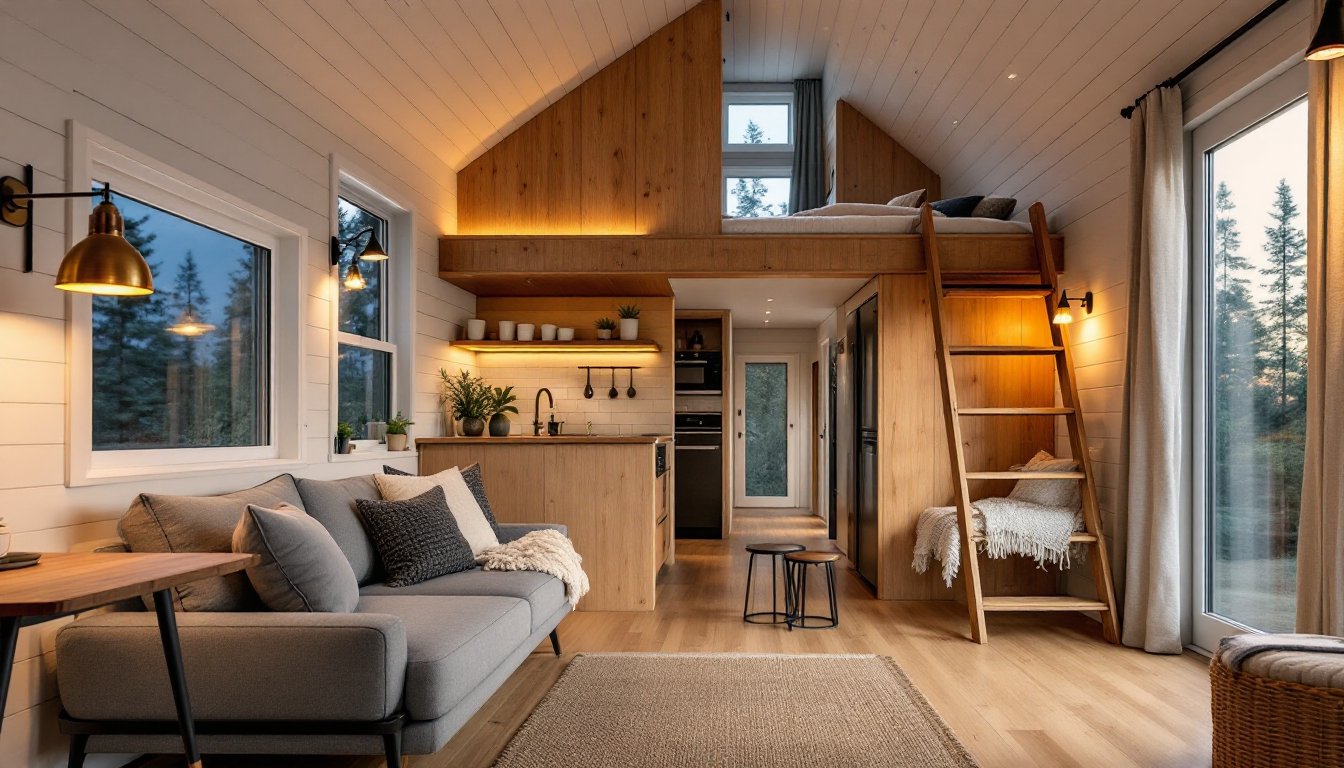
Vertical zones maximize utility without eating floor space. Install a loft sleeping area with a minimum 36-inch ceiling clearance above the mattress (42 inches if you sit up in bed). Use the 6–7 feet of vertical space below for closets, a workspace, or a reading nook. Just ensure loft ladders meet IRC R311.7 stair/ladder standards if the space is classified as habitable.
Choosing the Perfect Color Palette for Warmth
Warm neutrals anchor tiny interiors without the visual weight of dark saturated colors. Greige (gray-beige hybrids), soft taupes, and creamy off-whites reflect light while adding subtle warmth. Avoid stark white, it reads sterile in small spaces and shows dirt quickly.
Accent walls work if proportional. In a 10×20-foot space, painting one 10-foot end wall in a warm terracotta or muted sage creates a focal point without overwhelming the room. Keep the remaining three walls light to preserve the sense of openness. Paint coverage averages 350–400 square feet per gallon for quality latex: a single gallon typically handles accent walls in most tiny houses.
Wood tones add instant coziness but require balance. If you’ve installed tongue-and-groove pine paneling or shiplap on walls, limit wood ceiling treatments to prevent a cabin-dark effect. Pair natural wood with painted surfaces at a 60/40 ratio, 60% light painted surfaces, 40% warm wood.
Color temperature consistency matters more than palette. Mix cool grays with warm beiges and the space feels disjointed. Stick to either warm-leaning neutrals (beiges, warm grays, soft ochres) or cool-leaning tones (true grays, soft blues, white whites) throughout finishes, textiles, and décor. Projects featured in home design showcases often demonstrate this cohesive approach across various room sizes.
Texture Layering Techniques That Transform Tiny Spaces
Textile stacking creates depth without clutter. Start with a wool or jute area rug to define living zones and absorb footstep noise on hard floors. Layer a 100% cotton throw blanket over a linen sofa, then add two 18×18-inch or 20×20-inch throw pillows in contrasting textures, one velvet, one chunky knit. Each layer adds visual interest and tactile warmth.
Wall texture softens hard surfaces. Install a 3/8-inch shiplap accent wall instead of flat drywall in living areas. The horizontal shadow lines add dimension. Alternatively, hang a woven wall hanging or macramé piece (24–36 inches wide) to break up flat painted surfaces without drilling dozens of holes for gallery walls.
Window treatments matter more in small spaces because windows occupy a larger percentage of wall area. Choose thermal-lined linen curtains that puddle slightly on the floor (add 2–3 inches to the length for this effect). The fabric weight and floor contact create a grounded, finished look. Mount curtain rods at ceiling height, not at the window frame, this draws the eye up and makes walls feel taller.
Natural materials ground interiors. A live-edge floating shelf made from 2-inch-thick walnut or oak adds organic texture and serves as practical storage. Pair with ceramic or stoneware dishware visible on open shelving, the matte glazes and irregular edges contrast nicely with manufactured materials like laminate countertops or vinyl flooring.
Multi-Functional Furniture That Enhances Comfort
Storage ottomans replace coffee tables and hide clutter. Look for units with removable lids and interior dimensions of at least 30×18×18 inches, enough to store throw blankets, books, or off-season clothing. Upholstered tops in durable fabrics (performance linen, microfiber) serve as extra seating or footrests.
Murphy beds or wall beds reclaim floor space daily. Modern piston-lift mechanisms (rated for 1,000+ cycles) allow one person to raise and lower a queen mattress in under 30 seconds. When closed, the bed’s underside can display artwork or serve as a fold-down desk. Installation requires attaching to wall studs with 3-inch lag bolts, if building new, frame a reinforced section with double 2×6 studs spaced 16 inches on center.
Extendable dining tables adapt to use. A drop-leaf table expands from 24 inches (seating two) to 48 inches (seating four) when needed, then folds flat against the wall. Pair with folding chairs stored on wall-mounted hooks, they’re accessible but don’t consume floor space daily.
Built-in seating with storage maximizes awkward corners. A window seat with a hinged plywood top (3/4-inch cabinet-grade birch) and piano hinge creates a reading nook while hiding shoes or tools underneath. Add a 4-inch foam cushion wrapped in canvas for comfort. Designers profiled in interior makeover articles frequently use this tactic in compact spaces.
Lighting Design to Create Intimate Ambiance
Layered lighting prevents the single-overhead-bulb trap. Every tiny house needs three layers: ambient (general illumination), task (focused work light), and accent (mood lighting). A flush-mount LED ceiling fixture (1200–1600 lumens for a 150-square-foot room) provides baseline visibility, but it’s harsh alone.
Dimmable LED strips under cabinets or lofts add task lighting without占用 headroom. Install 12V DC strips (available in 16-foot reels: cut to length at marked intervals) with an inline dimmer. These draw minimal power, critical if running off-grid on solar, and provide glare-free illumination for cooking or reading.
Warm-temperature bulbs (2700K) mimic firelight and make small spaces feel snug rather than clinical. Avoid cool white (4000K+) bulbs in living areas, they’re appropriate for workshops, not relaxation zones. If using vintage Edison-style bulbs for aesthetics, choose LED versions: incandescent Edisons waste energy as heat and dim quickly.
Strategic placement beats quantity. Two swing-arm wall sconces flanking a sofa provide better reading light than a single floor lamp while freeing up floor space. Install sconces 60–66 inches from the floor (measured to the fixture center) for optimal light spread when seated.
Corded pendant lights work in rentals or builds where you can’t hardwire. Hang a pendant with a braided fabric cord over a dining nook or desk, securing the cord to the ceiling with adhesive hooks. Use a plug-in dimmer between the outlet and cord for adjustable ambiance without electrical permits.
Conclusion
Cozy tiny house interiors result from intentional layering, textures that soften hard surfaces, lighting that shifts with the day, and furniture that earns its footprint. Start with one zone at a time: upgrade bedroom lighting before tackling the kitchen, or add textiles to the living area before reworking furniture. Small, deliberate improvements compound faster than all-at-once overhauls, especially when working within tiny house budgets and physical constraints.