Table of Contents
ToggleTile flooring in bedrooms has come a long way from the cold, sterile aesthetic many homeowners once avoided. With advances in porcelain technology, realistic wood and stone looks, and a growing appreciation for low-maintenance surfaces, bedroom tiles now offer comfort, style, and practicality. Whether renovating a master suite or upgrading a guest room, choosing the right tile involves more than picking a pattern, it’s about understanding material properties, installation requirements, and long-term performance. This guide walks through the key design decisions, from style trends and layout patterns to material selection and color strategies, so DIYers and homeowners can make informed choices that look great and last.
Key Takeaways
- Bedroom tiles design with porcelain or ceramic materials offers superior durability, moisture resistance, and low maintenance compared to traditional carpet or hardwood flooring.
- Wood-look porcelain planks and marble-effect tiles dominate 2026 bedroom trends, combining aesthetic warmth with practical performance using large-format sizes that reduce grout lines.
- Large-format tiles require a properly prepared subfloor with controlled deflection (L/360 maximum), making cement backer board or uncoupling membranes essential for installations over wood framing.
- Neutral color palettes with matte finishes are ideal for bedrooms, as they hide imperfections, work with any décor, and avoid the maintenance burden of dark tiles that show dust and footprints.
- Dry-laying your tile pattern before installation, budgeting 10–15% extra material for cuts, and testing samples under actual bedroom lighting conditions prevent costly mistakes and buyer’s remorse.
- Radiant floor heating ($10–$15 per square foot) eliminates tile’s cold feel, though budget-friendly area rugs provide a simpler solution for warmth without major renovation costs.
Why Choose Tiles for Your Bedroom?
Bedroom tiles offer several practical advantages over carpet or hardwood, especially in climates with humidity or for households with allergies. Porcelain and ceramic tiles are non-porous, resist moisture, and don’t harbor dust mites or pet dander, a major win for allergy sufferers. They’re also exceptionally durable, often outlasting wood floors by decades with minimal maintenance.
Unlike carpet, tiles don’t trap odors or stains. Spills wipe up easily, and you won’t need professional steam cleaning every few years. For bedrooms above garages or in basements, tile provides a moisture barrier that wood simply can’t match without additional vapor treatments.
The main trade-off is temperature. Tile feels cold underfoot in winter unless paired with radiant floor heating, which adds $10–$15 per square foot to installation costs (material and labor combined, depending on region and system type). Area rugs are a simpler, budget-friendly solution for warmth and softness.
One more consideration: tile installation over a wood subfloor requires a proper underlayment system, typically ¼” cement backer board or an uncoupling membrane like Schluter-DITRA, to prevent cracking from subfloor flex. If the bedroom is on a concrete slab, you can tile directly after proper surface prep. Always check local building codes: some jurisdictions have specific deflection requirements for tile over wood.
Popular Bedroom Tile Design Styles and Trends
Bedroom tile trends in 2026 lean toward realistic textures, oversized formats, and neutral palettes that mimic natural materials. Here are the two dominant styles shaping residential projects.
Wood-Look Porcelain Tiles
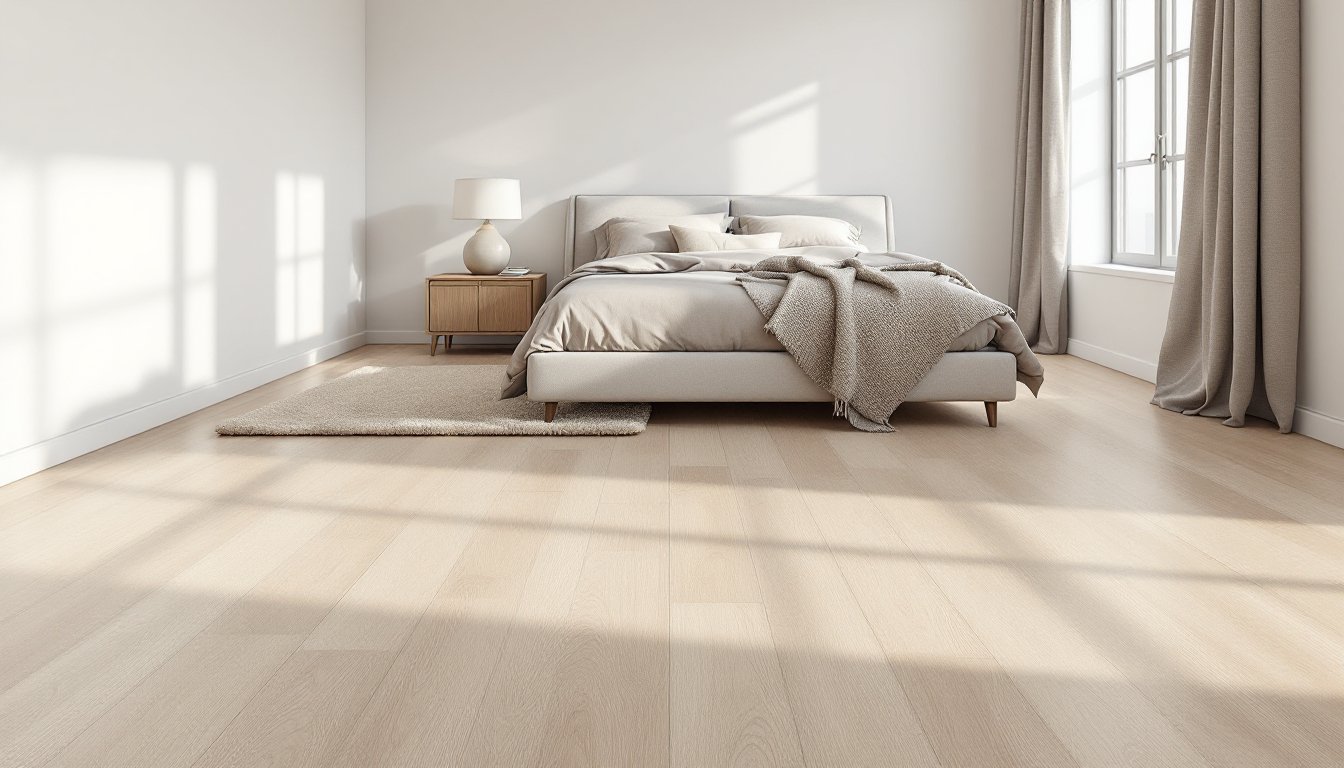
Wood-look porcelain planks remain the most popular choice for bedrooms, combining the warmth of hardwood with tile’s durability. These tiles use high-definition inkjet printing and embossed surfaces to replicate oak, walnut, or reclaimed barn wood grain. Standard plank sizes run 6″ × 36″, 8″ × 48″, or 9″ × 60″, with longer planks creating fewer grout lines and a more seamless appearance.
Install them in a random offset pattern (also called a running bond) with staggered seams, never align end joints, as that weakens the layout visually and structurally. For a modern twist, try a herringbone or chevron pattern, though these require more cuts and waste, adding 15–20% to material costs.
Wood-look tiles work especially well in bedrooms with rustic, farmhouse, or Scandinavian design schemes. They pair beautifully with neutral bedding and natural fiber rugs. If radiant heat isn’t in the budget, wood-look tiles feel slightly warmer underfoot than polished stone due to their matte finish and lower thermal mass.
Marble and Stone-Effect Tiles
For a luxe, hotel-inspired bedroom, marble-effect porcelain delivers the elegance of Carrara or Calacatta marble without the maintenance headaches of natural stone. Real marble is porous, stains easily, and requires regular sealing, porcelain mimics the look with zero upkeep.
Large-format tiles (24″ × 24″ or 24″ × 48″) showcase marble veining with minimal grout interruption. Book-matched layouts, where adjacent tiles mirror each other’s veining pattern, create dramatic feature walls or flooring focal points behind a bed. Some tile lines even include coordinating wall panels for a cohesive modern aesthetic throughout the space.
Stone-effect tiles also include slate, travertine, and limestone looks, which suit transitional or Mediterranean bedroom styles. These tiles often feature textured surfaces for slip resistance, though heavy texture can feel uncomfortable barefoot, test samples before committing to a full order.
Choosing the Right Tile Size and Layout Pattern
Tile size and layout dramatically affect a bedroom’s visual proportions. Larger tiles make small rooms feel more spacious by reducing grout lines, while smaller tiles (like mosaics or 12″ × 12″ squares) suit vintage or eclectic designs.
Large-format tiles (18″ × 18″ and up) are trending for master bedrooms. They require a flatter subfloor, deflection must not exceed L/360 under live load per IRC standards for tile installations. If your subfloor bounces or squeaks, sister joists or add blocking before tiling, or you’ll see cracked grout and tiles within a year.
For layout patterns, a straight lay (grid pattern) is the simplest DIY option and wastes the least material. A diagonal layout adds visual interest but increases cuts and waste by 10–15%. Offset or brick patterns work well with rectangular tiles: keep the offset at 30–50% of the tile length for best results, anything less looks accidental.
Checkerboard patterns using contrasting tile colors inject bold personality into bedrooms, especially in mid-century or Art Deco-inspired spaces. Use two colors in equal-sized squares (12″ × 12″ or 18″ × 18″) and keep grout lines consistent, inconsistent spacing ruins the effect.
Always dry-lay tiles before mixing thinset to confirm your pattern and make adjustments. Starting from the room’s center prevents awkward slivers along visible walls. Budget an extra 10% material for cuts and breakage, 15% for diagonal or patterned layouts.
Best Tile Materials for Bedroom Floors
Not all tiles perform equally in bedrooms. Here’s a breakdown of the most common materials and their suitability for residential sleeping spaces.
Porcelain tile is the top choice for bedroom floors. It’s denser and less porous than ceramic, rated for residential and light commercial use (look for PEI rating 3 or 4 for bedrooms). Porcelain resists scratches, moisture, and temperature swings, making it ideal for bedrooms in any climate. Full-body porcelain (color runs through the entire tile) hides chips better than surface-glazed versions.
Ceramic tile costs less than porcelain but is more porous and prone to chipping. It works fine for bedrooms with light foot traffic and no moisture exposure. Glazed ceramic offers more color and pattern variety but can show wear over time in high-traffic areas near doorways.
Natural stone tiles, marble, travertine, slate, deliver authentic beauty but require sealing every 1–2 years and are susceptible to staining from spills. Stone is also heavier, requiring a stronger subfloor. It’s best left to experienced DIYers or professionals.
Luxury vinyl tile (LVT) isn’t technically tile, but it’s worth mentioning as a DIY-friendly alternative. It mimics wood and stone, installs with click-lock systems over most subfloors, and feels warmer than porcelain. But, LVT can dent under heavy furniture and doesn’t add the same resale value as porcelain or ceramic.
For DIY installation, porcelain plank tiles with rectified edges (precisely cut, minimal size variation) are the easiest to work with. They allow tight grout joints (⅛” or 3/16″) and forgive minor layout imperfections better than large-format natural stone.
Color and Texture Considerations for Bedroom Tiles
Color and texture influence both the look and feel of a tiled bedroom floor. Neutral tones, grays, beiges, soft whites, and warm taupes, dominate 2026 bedroom trends because they pair with any decor and won’t feel dated in five years. Light colors reflect more natural light, making smaller bedrooms feel airier.
Darker tiles (charcoal, espresso, deep navy) create a cozy, grounding effect in larger master suites. Keep in mind that dark tiles show dust, pet hair, and water spots more readily than mid-tones, plan for frequent sweeping or a robot vacuum.
Matte finishes are the safest choice for bedrooms. They hide minor scratches and provide slight slip resistance without the cold, hard feel of polished tiles. Polished or glossy tiles amplify light and suit modern, minimalist aesthetics, but they’re slippery when wet and show every footprint, not ideal near en-suite bathrooms.
Textured tiles add depth and tactile interest but can be uncomfortable barefoot. A light texture or brushed finish strikes a good balance. Heavily textured tiles also trap dirt in grooves, making cleaning harder.
Grout color matters more than many DIYers realize. Matching grout (close to tile color) creates a seamless look and hides staining. Contrasting grout, like dark gray with white tiles, emphasizes the layout pattern but requires more maintenance. Always use sanded grout for joints wider than ⅛” and seal grout lines after installation to resist moisture and staining.
Finally, test large samples in the actual bedroom before ordering full quantities. Lighting conditions (natural vs. artificial, morning vs. evening) drastically change how tile color and finish appear. Most suppliers offer sample tiles or return-friendly small boxes, take advantage of them.