Table of Contents
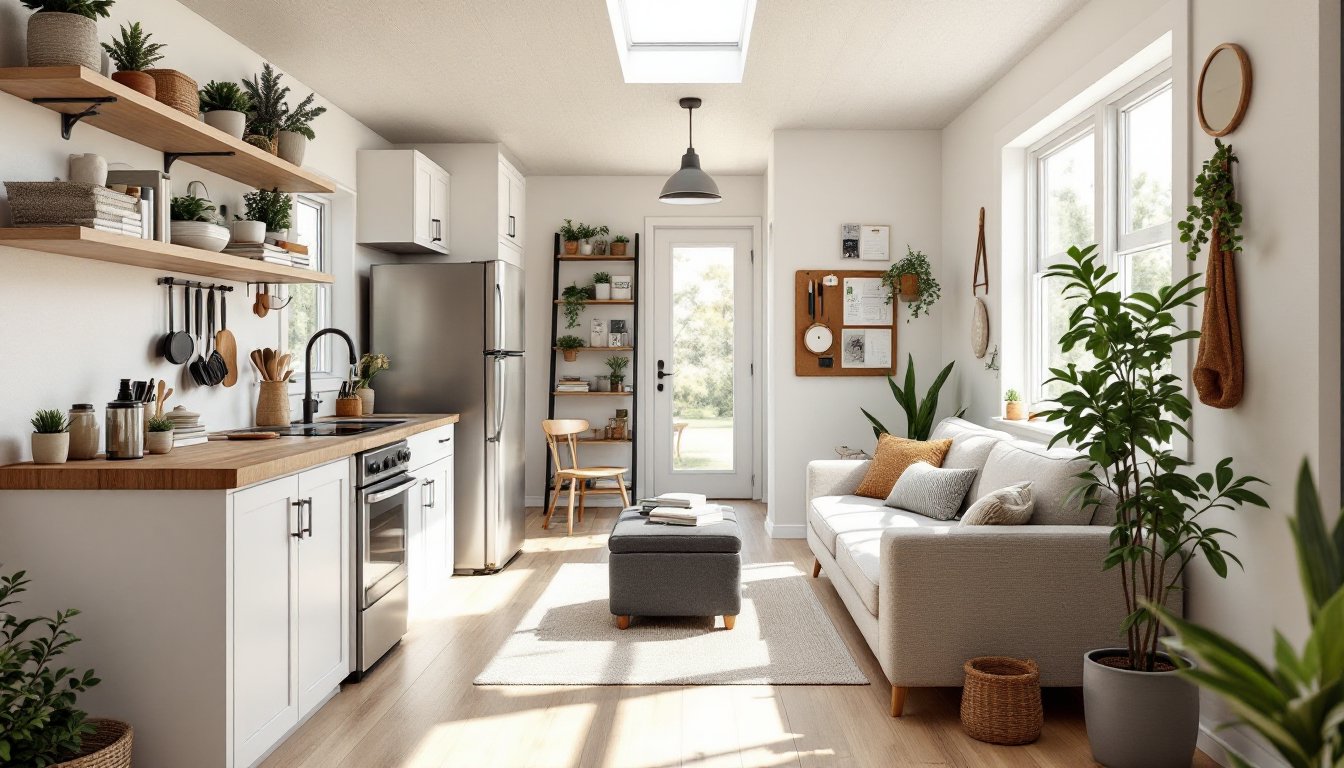
ToggleA 12×20 tiny house delivers 240 square feet of living space, just enough to craft a fully functional home if every square inch counts. The footprint mirrors a single-car garage, but with thoughtful planning, it can accommodate sleeping, cooking, bathing, and storage without feeling cramped. This guide walks through layout strategies, furniture choices, storage hacks, and design tricks that turn tight quarters into a comfortable, efficient living space. Whether building from scratch or renovating an existing structure, these proven approaches help make the most of a compact footprint.
Key Takeaways
- A 12×20 tiny house interior delivers 240 square feet organized into three functional zones: living/kitchen, bathroom, and sleeping area, requiring every square inch to work efficiently.
- Multi-functional furniture like Murphy beds, storage ottomans, and drop-leaf tables eliminates the need for separate items and maximizes usable floor space in compact layouts.
- Vertical storage, under-stair drawers, and bed platform storage transform a 12×20 tiny house interior by utilizing wall and ceiling space without consuming floor area.
- Apartment-scale appliances and a 20-inch-deep counter in the kitchen save precious space while maintaining full functionality for daily cooking and meal prep.
- Light colors, natural windows, and consistent flooring throughout the space visually expand a tiny house, making 240 square feet feel significantly larger than it actually is.
Understanding the Layout Potential of a 12×20 Tiny House
A 12×20 rectangle offers more layout flexibility than many assume. The 240-square-foot floor plan typically divides into three functional zones: living/kitchen (roughly 100-120 sq ft), bathroom (25-35 sq ft), and sleeping area (80-100 sq ft). Ceiling height matters as much as floor area, structures built on trailers often max out at 13.5 feet total height (to stay road-legal), leaving around 10-11 feet of interior clearance after subfloor and roofing. Stick-built tiny houses on permanent foundations can go taller, opening up loft options.
Most builders orient the 20-foot dimension as the length, placing the entrance on a 12-foot gable end or along the long wall. Side entry saves interior square footage but requires careful furniture placement to avoid blocking the door swing. Gable-end entry creates a natural flow from front to back, with the kitchen and living area near the entrance and the bedroom or loft at the rear.
Load-bearing walls in a 12×20 structure typically run parallel to the long axis, supported by floor joists spanning the 12-foot width (standard 2×8 or 2×10 joists work without mid-span support at this distance). Avoid cutting into these walls without consulting local building codes or an engineer. Interior partition walls, but, can often be repositioned or eliminated to open up sightlines and make the space feel larger.
Essential Space-Saving Furniture for Your 12×20 Interior
Standard residential furniture overwhelms a tiny house interior. A typical sofa runs 84-96 inches long, half the length of the entire structure. Downsizing to apartment-scale or RV-sized pieces keeps pathways clear and prevents visual clutter.
Key measurements to keep in mind:
- Loveseat or compact sofa: 60-72 inches
- Apartment-size dining table: 30×48 inches (seats four)
- Twin or full mattress: 39×75 or 54×75 inches (queen mattresses at 60×80 often feel too large for ground-floor bedrooms)
Buying furniture made for small apartments rather than standard homes immediately improves flow and usability in a 12×20 footprint.
Multi-Functional Pieces That Do Double Duty
Furniture that serves two or more purposes eliminates the need for separate items. A Murphy bed folds into a wall cabinet during the day, freeing up 30-40 square feet for living space. Wall-mounted versions require 2×6 or 2×8 blocking installed between studs during framing to support the weight (a full-size Murphy bed with mattress weighs 200+ pounds).
Storage ottomans and lift-top coffee tables hide blankets, books, and seasonal items while doubling as seating or work surfaces. A drop-leaf table mounted to a kitchen wall serves as a prep counter when folded down and expands for meals. Look for designs with locking hinges rated for at least 50 pounds per leaf.
Convertible futons or sofa beds work better in tiny houses than traditional pull-out couches, which add bulk even when closed. Japanese-style futons (thin cotton mattresses that roll or fold) offer the smallest footprint but require floor space for daily rolling and storage. DIYers comfortable with woodworking can build custom folding furniture tailored to exact room dimensions, maximizing every inch.
Creative Storage Solutions That Maximize Every Inch
Vertical storage transforms unused wall and ceiling space into functional square footage. Floor-to-ceiling shelving along one long wall adds 60-80 linear feet of shelf space without consuming floor area. Mount shelves on 16-inch on-center studs using heavy-duty brackets rated for the load, books and kitchenware add up fast.
Under-stair storage is essential if the design includes a loft. Each stair tread can hide a pull-out drawer (typically 10-12 inches deep), and the entire staircase can double as a closet or pantry. Stair-step storage beats a ladder for loft access while adding 20-30 cubic feet of hidden space. Build stairs with 2×12 stringers and ¾-inch plywood treads to handle daily use and storage weight.
Other high-value storage zones:
- Toe-kick drawers beneath kitchen cabinets and bathroom vanities (4-6 inches tall, perfect for flat items like baking sheets or cleaning supplies)
- Overhead cabinets above doorways and windows (install at least 80 inches above the floor to avoid head clearance issues)
- Bed platform drawers built into a raised sleeping platform (adds 12-18 inches of clearance for roll-out storage bins)
- Magnetic or pegboard walls in the kitchen for knives, utensils, and pots (saves 50% of drawer space)
Avoid bulky dressers. Instead, use in-wall closets framed between studs (a 16-inch stud bay offers 14.5 inches of actual depth, enough for hangers) or hanging fabric organizers that mount on closet rods. Many tiny house owners adopt capsule wardrobes to reduce clothing volume and eliminate the need for large closets entirely.
Kitchen Design Strategies for Compact Cooking Spaces
A functional tiny house kitchen typically occupies 30-50 square feet. Prioritize a two-burner cooktop (propane or induction) over a full-size range, and choose an 18- or 24-inch-wide refrigerator instead of standard 30-36-inch models. Apartment-size appliances fit the scale without sacrificing usability.
Counter depth matters more than length. Standard counters run 25 inches deep, but tiny house galleys often work fine at 18-20 inches, freeing up precious floor space. Laminate, butcher block, or stainless steel all hold up well: avoid tile (grout lines collect grime and take up thickness).
Upper cabinets should reach the ceiling, wasted space above cabinets collects dust and feels claustrophobic in a small room. Use the top shelves for items accessed infrequently. Open shelving works in tiny houses if kept tidy, but closed cabinets hide visual clutter better. A mix of both offers flexibility.
Opt for a single-basin sink (18×18 or 20×20 inches) rather than a double. Pair it with a pull-down or wall-mounted faucet to maximize clearance. Install a garbage disposal if local codes allow, composting toilets are common in tiny houses, but food waste still needs a plan.
Many small-space kitchen ideas translate well to tiny houses, including magnetic knife strips, fold-down cutting boards, and under-shelf baskets. Skip the dishwasher unless it’s a compact 18-inch model: hand-washing in a deep sink often makes more sense in a one- or two-person household.
Sleeping Loft vs. Ground-Floor Bedroom: Choosing Your Layout
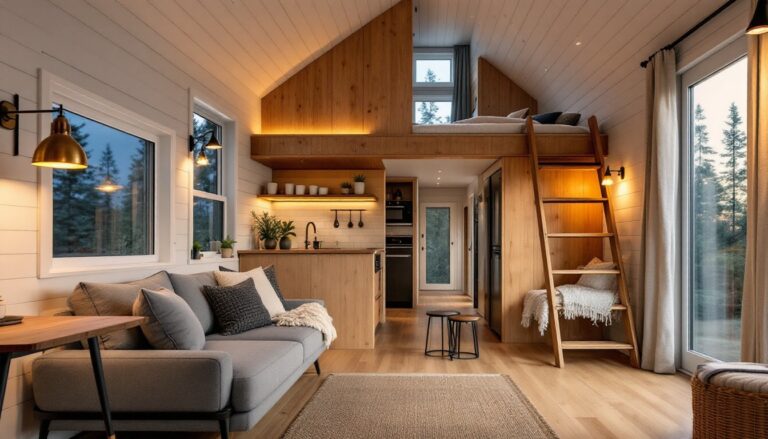
The sleeping loft versus ground-floor bedroom decision hinges on mobility, ceiling height, and personal preference. Lofts free up ground-floor space for living and storage, but they require climbing a ladder or steep stairs multiple times a day. A loft with only 36-42 inches of headroom (common in trailer-based builds) works for sleeping but feels tight for sitting up or changing clothes. If the structure allows 48+ inches of loft clearance, the space becomes more livable.
Loft floors need proper support. Use 2×6 or 2×8 joists on 16-inch centers, spanning the 12-foot width. Add ¾-inch tongue-and-groove plywood or OSB subfloor, secured with construction adhesive and screws to prevent squeaking. Install a guardrail at least 36 inches high (42 inches is safer) on any open edge, this isn’t optional and most local codes require it.
Ground-floor bedrooms suit anyone with mobility concerns, young children, or those who dislike climbing. A bedroom at the rear of the 12×20 footprint typically measures 8×10 or 8×12 feet, enough for a full or queen mattress and narrow nightstands. Use a pocket door or barn door to save the swing space a standard hinged door requires (a 32-inch door needs about 10 square feet of clearance).
Some builders split the difference: a partial loft over the bathroom and entryway leaves the back half of the house open to full ceiling height, creating a ground-level bedroom without sacrificing loft storage above the front section. This hybrid layout works especially well in taller structures with 12+ feet of interior clearance.
Design Tricks to Make Your 12×20 Tiny House Feel Spacious
Visual and spatial strategies can make 240 square feet feel significantly larger without adding square footage.
Light colors on walls and ceilings reflect natural light and push boundaries outward. White, soft gray, or pale beige work well: avoid dark accent walls in tiny spaces, they shrink the room. Use semi-gloss or satin paint (covers better than flat and wipes clean easily). One gallon covers roughly 350-400 square feet, so two gallons handles walls and ceiling with a second coat.
Windows and skylights matter more in a tiny house than in conventional homes. Aim for window area equal to 10-15% of floor space (24-36 square feet in a 12×20 house). South-facing windows maximize natural light in northern climates, while east and west windows benefit from morning or evening sun. Skylights or roof windows above a loft add headroom and light without sacrificing wall space for cabinets. Install flashing carefully, roof penetrations are a top source of leaks.
Consistent flooring throughout the space avoids visual breaks that make rooms feel smaller. Luxury vinyl plank (LVP) or engineered hardwood installs over most subfloors and stands up to traffic and moisture better than laminate. Avoid transitions and thresholds between rooms when possible.
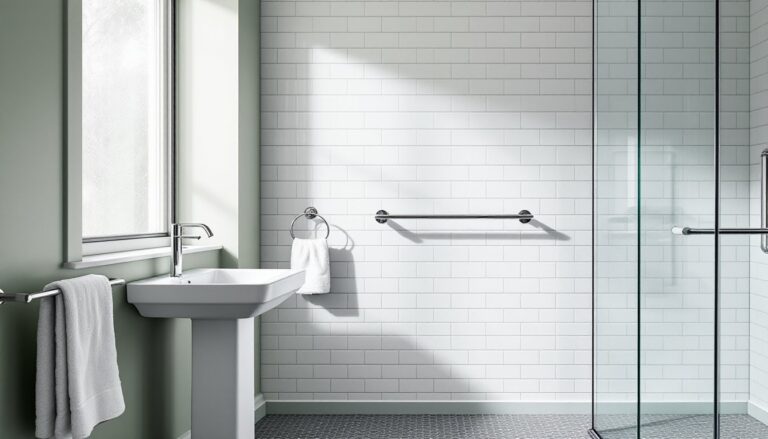
Mirrors and glass amplify light and sightlines. A full-length mirror on a closet door or bathroom wall doubles the perceived depth. Frameless glass shower doors (if codes permit) keep a small bathroom from feeling boxed in.
Keep decor minimal. Every item on display competes for visual attention. Many tiny house dwellers adopt ideas from budget-friendly makeover projects, using modular storage that adapts as needs change. Built-ins look cleaner than freestanding furniture, and they don’t shift or tip during transport if the house is on a trailer.