Table of Contents
ToggleTulsa homeowners are looking at their kitchens differently these days. Rising home equity, remote work permanence, and aging cabinetry from the early 2000s have created a perfect storm of remodeling demand. Whether you’re planning a full gut-and-rebuild or a targeted refresh of countertops and appliances, the decisions you make now will affect daily life for the next 15 to 20 years. This guide walks through budgets, permitting, contractor selection, and the design choices shaping Tulsa kitchens in 2026, with a clear-eyed look at what DIYers can tackle and when to call in the pros.
Key Takeaways
- A kitchen remodel in Tulsa typically costs $25,000 to $50,000 for mid-range updates and recoup 60% to 80% of the investment at resale, making it one of the highest-value home improvements.
- Two-tone cabinetry, quartz countertops, and matte black fixtures dominate current Tulsa kitchen remodel trends, with homeowners favoring practical, timeless designs over bold statements.
- Always hire licensed contractors with verified insurance, obtain three detailed bids, and tie payments to completion milestones rather than paying large upfront deposits to protect your kitchen remodel investment.
- DIY-friendly kitchen projects include painting cabinets and installing backsplash tile, but structural work, gas lines, and electrical upgrades must be handled by licensed professionals to ensure code compliance and safety.
- Most substantial kitchen remodels in Tulsa require permits for electrical, plumbing, and structural work; skipping permits risks complications at resale and can void insurance coverage.
Why Tulsa Homeowners Are Prioritizing Kitchen Remodels Right Now
Tulsa’s housing market has seen steady appreciation over the past five years, giving homeowners equity to reinvest. Many houses built in the 1990s and early 2000s still have builder-grade oak cabinets, laminate counters, and fluorescent lighting, functional, but dated.
Remote and hybrid work have shifted priorities. The kitchen isn’t just for dinner prep anymore: it’s a coffee bar at 7 a.m., a lunch spot during Zoom breaks, and the assignments hub after school. Families are investing in layouts that support multiple users without bottlenecks.
Energy costs matter too. Replacing a 20-year-old refrigerator or range with ENERGY STAR–rated appliances can cut utility bills by 15% to 25%, and Tulsa winters and summers both test HVAC systems hard. Better ventilation, sealed ductwork in adjacent spaces, and efficient lighting all contribute to long-term savings.
Finally, resale value remains strong. A well-executed kitchen remodel typically recoups 60% to 80% of its cost in Tulsa’s market, especially in neighborhoods like Maple Ridge, Brookside, and South Peoria, where buyers expect updated interiors.
Setting Your Kitchen Remodel Budget in Tulsa
Start with a hard number. Decide what you can spend, factoring in cash, home equity lines, or financing, before you walk into a showroom. Add a 15% to 20% contingency for surprises: rotted subfloor under old vinyl, outdated electrical panels that need upgrades, or plumbing that’s not up to current code.
Break your budget into categories:
- Cabinets: 30% to 40% of total spend
- Countertops: 10% to 15%
- Appliances: 15% to 20%
- Labor (if hiring): 20% to 30%
- Flooring, backsplash, lighting, fixtures: remaining 10% to 20%
If you’re doing some of the work yourself, shift the labor percentage into materials or upgrades.
Average Costs for Tulsa Kitchen Renovations
Tulsa’s cost of living is below the national average, and that translates to remodeling. Here’s what homeowners typically spend in 2026:
- Minor refresh (paint, hardware, countertop replacement): $8,000 to $15,000
- Mid-range remodel (new cabinets, counters, appliances, flooring): $25,000 to $50,000
- Upscale overhaul (custom cabinets, high-end appliances, structural changes): $60,000 to $100,000+
Labor rates for licensed contractors in Tulsa run $50 to $85 per hour depending on trade and experience. Cabinet installation alone can be $2,500 to $5,000 for a mid-size kitchen. Electrical and plumbing permits add $100 to $300 each, plus inspection fees.
Popular Kitchen Design Trends for Tulsa Homes
Tulsa kitchens in 2026 lean practical rather than flashy. You’ll see more matte finishes, mixed materials, and designs that don’t scream “I remodeled in 2026.”
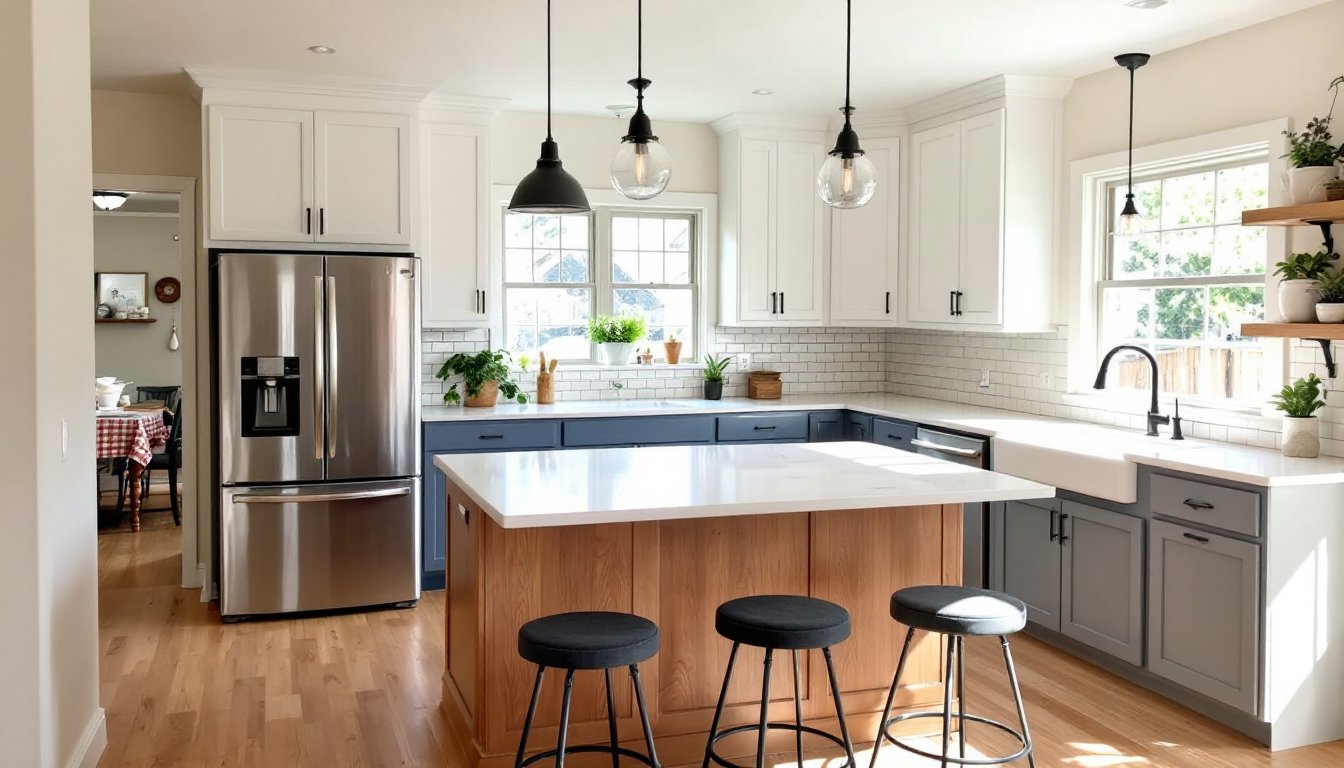
Two-tone cabinetry is everywhere: darker lowers (navy, charcoal, olive green) with white or light wood uppers. It breaks up visual mass without going full-dark, which can feel heavy in a 150-square-foot galley.
Quartz countertops dominate. They’re non-porous, low-maintenance, and cost $60 to $100 per square foot installed in Tulsa, competitive with granite but without the sealing hassle. Look for slabs with subtle veining rather than bold patterns: they age better.
Open shelving works if you’re disciplined about what you display. It’s cheaper than upper cabinets ($15 to $40 per linear foot for solid wood or metal brackets), but everything’s on view. Best used for one or two short runs flanking a window or range.
Kitchen design in Tulsa also embraces larger islands. If space allows, a 4-foot by 8-foot island with seating for three or four becomes the heart of the room. Include at least one 20-amp circuit for small appliances and consider a prep sink if your main sink is more than 8 feet away.
Matte black faucets and cabinet hardware are still popular, but watch for fingerprints. Brushed or satin finishes hide smudges better. For backsplashes, classic 3-by-6-inch subway tile in white or soft gray remains a safe, timeless choice. It costs $8 to $15 per square foot installed and pairs with nearly any cabinet color.
Finding the Right Kitchen Remodeling Contractor in Tulsa
Start by asking for referrals from neighbors, especially if you see a finished kitchen you like. Personal experience trumps online reviews, but check both. Look for contractors with a portfolio that matches your style and budget.
When vetting candidates:
- Verify licensing and insurance. Oklahoma doesn’t require a general contractor license for residential projects under $50,000, but reputable contractors carry liability and workers’ comp insurance. Ask for proof.
- Get three detailed bids. Line-item estimates let you compare apples to apples. Watch for vague terms like “materials included”, specify brands, models, and grades.
- Check references and visit past jobs. A contractor confident in their work will happily share contact info for previous clients.
- Clarify the payment schedule. Never pay more than 10% to 20% upfront. Tie payments to milestones: demolition complete, rough-in inspections passed, cabinets installed, final punch list.
Avoid contractors who pressure you to sign same-day or who can start “tomorrow.” Good contractors are booked four to eight weeks out in Tulsa’s current market.
For inspiration and professional listings, homeowners often browse platforms showing finished kitchen projects and contractor portfolios to compare styles and workmanship before reaching out.
DIY vs. Professional Kitchen Remodeling: What Tulsa Homeowners Should Know
Some tasks are DIY-friendly: others aren’t. Be honest about your skill level and the tools you own or can rent.
Good DIY projects:
- Painting cabinets. Use a bonding primer (BIN or STIX), a quality cabinet enamel (Benjamin Moore Advance, Sherwin-Williams ProClassic), and a HVLP sprayer or foam roller. Budget a full weekend plus drying time.
- Installing tile backsplash. A wet saw costs $50 to rent for a day. Use modified thin-set on drywall, unmodified on cement board or over existing tile. Grout after 24 hours.
- Swapping hardware and lighting. New pulls and knobs transform dated cabinets for $2 to $10 each. Pendant lights over an island require basic wiring knowledge, if you’re comfortable with a voltage tester and wire nuts, you can do it. Turn off the breaker first.
Leave to the pros:
- Anything structural. Moving a load-bearing wall requires an engineer’s stamp and a permit. Contractors carry the liability: you don’t.
- Gas line work. Even minor repositioning of a gas range connection requires a licensed plumber in Tulsa. Code violations can void homeowner’s insurance.
- Major electrical upgrades. Adding a 50-amp circuit for a double oven or relocating a panel to accommodate a new layout is electrician territory. Expect $800 to $2,000 depending on scope.
- Custom cabinet installation. Shimming, scribing, and securing uppers to studs in an old house with out-of-plumb walls is trickier than YouTube suggests. Pros get it level and square the first time.
Many Tulsa homeowners looking for vetted professionals start with resources listing top-rated kitchen remodel contractors to compare availability and reviews.
Navigating Permits and Regulations for Kitchen Remodels in Tulsa
Tulsa operates under the International Residential Code (IRC) with local amendments. Not every project requires a permit, but most substantial remodels do.
Permit required for:
- Electrical work beyond replacing a fixture (new circuits, panel upgrades, relocating outlets)
- Plumbing changes (moving sinks, adding gas lines, rerouting drains)
- Structural modifications (removing or altering walls, adding beams, cutting joists for ductwork)
- HVAC work (relocating vents, adding a range hood with exterior ductwork)
No permit needed for:
- Painting, cabinet refacing, or replacing hardware
- Installing new countertops without altering plumbing
- Swapping appliances in existing locations
- Replacing flooring without structural changes
Permit fees in Tulsa are $50 to $150 per trade, and inspections are scheduled through the city’s Development Services department. Plan for at least two to three inspections on a full remodel: rough-in (framing, electrical, plumbing), insulation, and final.
Skipping permits is risky. Unpermitted work can complicate home sales (buyers’ lenders often require sign-off), void warranties, and create liability if something goes wrong. If you hire a contractor, confirm in writing who’s responsible for pulling permits, usually it’s the contractor, but clarify upfront.
For broader project planning and general home improvement guidance, many DIYers consult trusted resources before diving into permit applications and contractor agreements. Code compliance protects your investment and keeps your family safe.