Table of Contents
ToggleTuscan kitchens carry a warmth that transcends trends, they’re built on centuries of tradition, rooted in natural materials, handcrafted details, and a color palette borrowed from sun-baked hillsides. If you’re planning a remodel or a cosmetic refresh, capturing that Mediterranean vibe isn’t about slapping up faux stone and calling it done. It requires deliberate choices in cabinetry, finishes, hardware, and texture. This guide walks through the defining elements of Tuscan kitchen design and the practical steps to bring Old-World charm into a modern home, without turning your space into a theme park.
Key Takeaways
- Mediterranean Tuscan kitchen design prioritizes warmth and authenticity through natural materials, visible craftsmanship, and an intentionally imperfect aesthetic inspired by rural Italian farmhouses.
- Choose warm, muted color palettes drawn from the Tuscan landscape—ochre, burnt sienna, terracotta, and aged greens—and apply them using limewash or textured finishes to avoid a flat, modern appearance.
- Select durable, natural materials like honed granite, travertine, or hand-scraped wood flooring with wide grout lines and earth-toned finishes to maintain the rustic character of your Tuscan kitchen design.
- Layer warm lighting through wrought-iron chandeliers, lantern-style pendants, and dimmer-controlled fixtures rather than relying on a single bright overhead, keeping bulbs at 2700K–3000K for warmth.
- Incorporate substantial hardware in oil-rubbed bronze, aged brass, or wrought iron, and display functional cookware and natural accents on open shelving to create a curated, lived-in Mediterranean feel.
- Embrace visible imperfections—hand-troweled walls, uneven cabinet finishes, and intentional wear—as these details signal authenticity rather than perfection in Tuscan kitchen design.
What Defines Mediterranean Tuscan Kitchen Design?
Tuscan kitchens aren’t minimalist. They lean into layered textures, warm metals, and visible craftsmanship. Think exposed wood beams, plaster walls with intentional imperfections, and cabinetry that looks like it was built in place rather than ordered from a catalog.
The aesthetic borrows heavily from rural Italian farmhouses, case coloniche, where kitchens served as the heart of daily life. Materials age visibly. Wood darkens, copper develops patina, stone shows wear. That’s intentional. Trying to keep everything pristine defeats the purpose.
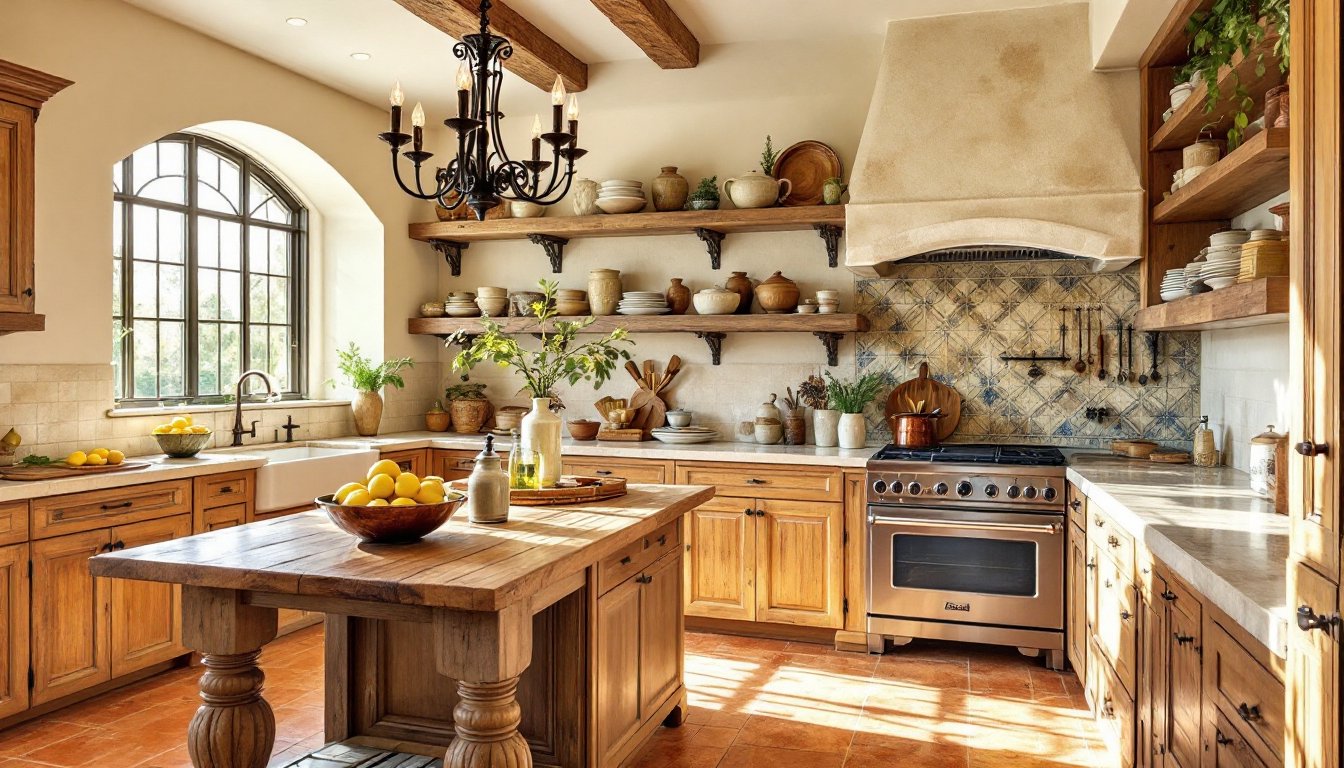
Key characteristics include rustic cabinetry (often distressed or with visible grain), natural stone countertops and floors, arched doorways or niches, and wrought iron or bronze hardware. Open shelving is common, displaying pottery, glassware, and cooking essentials. If your layout allows, a large farmhouse table or central island becomes a focal point, not just for prep work, but for gathering.
This style isn’t purely decorative. It’s functional. Deep apron-front sinks, pot racks within reach, and cooking zones centered around a substantial range or cooktop mirror the utilitarian roots of Italian country kitchens. If you’re retrofitting a modern kitchen, focus on swapping out the materials and finishes that clash, laminate counters, slab-front cabinets, and brushed nickel pulls, rather than gutting the whole layout.
Essential Color Palettes for Tuscan-Inspired Kitchens
Tuscan color schemes pull from the landscape: golden wheat fields, terracotta rooftops, aged stucco, olive groves, and iron-rich earth. The palette skews warm and muted, no stark whites or cool grays.
Base walls typically use ochre, burnt sienna, pale gold, or weathered cream. Limewash or plaster finishes add depth that flat latex can’t match. If limewash isn’t in the budget, look for paint with a matte or chalky finish, brands like Sherwin-Williams (e.g., “Cardboard” SW 6124) or Benjamin Moore (e.g., “Brandon Beige” 977) come close. Apply with a roller, then stipple or drag a dry brush for texture.
Accent colors include deep olive green, rusty red, and aged blue, used sparingly on shutters, trim, or a painted island. Avoid crisp, saturated tones. If you’re painting cabinetry, go for a finish that shows some grain or distressing. A glaze coat in raw umber or burnt umber, wiped back, creates shadow in recesses.
Ceiling beams and structural wood are usually stained dark or left natural if the species (like reclaimed pine or chestnut) has character. Don’t paint them white unless you’re willing to lose that rustic anchor. Design ideas for warm palettes often emphasize layering neutrals with organic accent colors to achieve that lived-in Mediterranean feel.
Test your colors in the actual space. Natural light shifts throughout the day, and warm tones can look muddy under cool LED bulbs. Swap to Edison-style or warm-white bulbs (2700K–3000K) if your kitchen feels too clinical.
Materials and Textures That Bring Tuscan Charm
Material choice defines authenticity. Tuscan kitchens rely on stone, wood, iron, and clay, not composites or laminates.
Countertops: Granite, marble (especially Carrara or travertine), or soapstone work well. Travertine has a porous, aged look but requires sealing every 6–12 months. Granite is more forgiving for daily use. Honed finishes (matte) feel more rustic than polished. Avoid quartz or solid-surface materials, they read too modern. Butcher block can work on an island if you’re mixing textures, but keep it oiled and maintained.
Flooring: Terracotta tiles (cotto) are traditional, though they’re softer than ceramic and prone to chipping if you drop a cast-iron skillet. For a more durable option, use porcelain tile that mimics terracotta or natural stone. Look for larger formats (12″x12″ or bigger) with slight color variation. Grout lines should be wide (⅜” to ½”) and use a sandy or earth-toned grout to blend. Skip the bright white.
Wood plank flooring, reclaimed or distressed, works if terracotta isn’t practical. Choose wide planks (6″ or more) in a hand-scraped or wire-brushed finish. Species like oak, hickory, or reclaimed pine hold up better than softer woods in a high-traffic kitchen.
Backsplashes: Tumbled marble, travertine subway tiles, or hand-painted ceramic tiles add texture. Avoid glossy or glass tiles. If you want a mural or decorative accent, consider hand-painted talavera tiles or a small fresco-style insert behind the range.
Stone and Terra Cotta Elements
Stone sinks (like a farmhouse-style apron front in travertine or granite) anchor the Tuscan look, but they’re heavy, verify that your base cabinets and countertop substrate can support the weight. A cast-iron or fireclay apron sink is a more budget-friendly alternative that still delivers visual heft.
For inspiration on Mediterranean materials, many homeowners incorporate rough-hewn stone accent walls or a stone-clad range hood. If adding stone veneer, use mortar joints that are slightly recessed and irregular, perfectly uniform grout lines look too new.
Terra cotta shows up beyond flooring: canisters, planters, even ceiling tiles in some traditional builds. If you’re installing terracotta tile, acclimate it indoors for 48 hours before laying it. The clay expands and contracts with moisture, and you don’t want lippage or cracking a month later.
Cabinetry and Furniture Choices for Authentic Style
Tuscan cabinetry avoids the sleek, frameless look. Instead, it’s framed construction with visible rails and stiles, often in knotty wood species like alder, pine, or oak.
Door styles are typically raised-panel or flat-panel with beaded detailing. Finish options include natural stain (showing grain and knots), distressed paint (sage, cream, or soft gray with sanded edges), or a combination, stained base cabinets with painted uppers. Glazing over paint adds age: apply a thin coat of glaze (umber or sienna), then wipe it back with a rag, leaving more in corners and crevices.
Avoid factory-smooth finishes. If you’re refinishing existing cabinets, lightly sand edges and high-touch areas after the topcoat to simulate wear. Use a random-orbit sander with 220-grit, then seal with paste wax.
Open shelving is a hallmark, either floating brackets made of wrought iron or chunky wood corbels supporting thick (1.5″–2″) shelving. Reclaimed barn wood or live-edge slabs add character. Secure shelves into wall studs with lag bolts: decorative brackets alone won’t hold the weight of stoneware and cookware.
For the island or dining table, look for turned legs, chunky bases, or trestle construction. A solid wood top, pine, oak, or walnut, should show grain and natural color variation. If budget allows, a custom-built island with built-in wine storage, a prep sink, or a small appliance garage keeps counters clear while maintaining the handcrafted vibe.
If you’re retrofitting stock cabinets, swap out the doors and drawer fronts for unfinished raised-panel versions, then finish them yourself. Companies like Cabinet Doors Depot or Barker Door offer custom sizes. Add furniture feet or a decorative valance to the base cabinets for a less built-in look.
Lighting and Hardware That Complete the Look
Lighting in Tuscan kitchens is layered and warm, never a single bright overhead. Think wrought-iron chandeliers, lantern-style pendants, and sconces with amber or seeded glass.
Over the island or table, hang a wrought-iron or bronze chandelier with candelabra bulbs. Size it so the fixture is roughly two-thirds the width of the table or island. Install on a dimmer for flexibility. For task lighting over the sink or prep areas, use pendant lights with metal cages or hand-blown glass shades. Avoid anything chrome or with clean geometric lines.
Under-cabinet lighting is practical but can look clinical. Use warm-white LED strips (2700K) tucked behind a small cove or toe-kick, not directly visible. If you prefer puck lights, choose bronze or oil-rubbed finishes.
Cabinet hardware should be substantial. Look for wrought iron, oil-rubbed bronze, or aged brass pulls and knobs. Bin pulls, ring pulls, and hammered-finish knobs fit the aesthetic. Avoid modern bar pulls or anything with a polished chrome or satin nickel finish. Hardware doesn’t need to match perfectly, mixing knobs and pulls adds to the collected-over-time feel.
For fixture ideas and installation tips, many design resources showcase how mixing metal finishes, like bronze pendants with black iron corbels, creates visual interest without looking mismatched.
Range hoods are often statement pieces: stone, plaster, or wood surrounds with corbels or decorative tile insets. A copper or hammered-metal hood insert can be fitted inside a custom wood frame. If fabricating a plaster hood, work with a finish carpenter or mason, code requires proper venting clearances (typically 18″–24″ above a gas cooktop per manufacturer specs).
Decorative Accents and Finishing Touches
Tuscan kitchens feel curated, not decorated. Accents are functional and natural, copper pots, ceramic bowls, olive oil dispensers, woven baskets, and fresh herbs in terracotta pots.
Display cookware on open shelving or a wrought-iron pot rack. Copper develops patina over time: don’t polish it obsessively. Hanging garlic braids, dried chili peppers, or bunches of rosemary near the range adds aroma and visual texture.
Textiles matter. Use linen or cotton dish towels in muted stripes or checks, avoid synthetic microfiber. A runner down the island or table in a woven or embroidered fabric softens hard surfaces. Window treatments should be simple: linen Roman shades, shutters, or café curtains. Skip heavy drapes or modern roller blinds.
Artwork and wall décor can include framed botanical prints, vintage Italian advertisements, or wrought-iron wall sconces holding candles. A large wooden cutting board, a mortar and pestle, or a ceramic fruit bowl become décor when left on the counter. Don’t overcrowd, Tuscan style breathes.
Add greenery: potted olive trees (if you have the light), trailing ivy, or a window-box herb garden. Real plants are worth the upkeep: faux versions rarely look convincing up close.
Finally, embrace imperfection. A hand-troweled plaster wall with slight trowel marks, a countertop edge that’s chipped, or a cabinet door that doesn’t quite align, these details signal authenticity. Tuscan design isn’t precious. It’s meant to be used, lived in, and aged gracefully.