Table of Contents
ToggleKitchen cabinets aren’t just storage, they’re the backbone of the entire kitchen. They dictate workflow, set the visual tone, and account for roughly 40% of a kitchen remodel budget. Get the cabinet design right, and everything else falls into place. Mess it up, and even high-end appliances and countertops won’t save the space. Whether planning a full gut renovation or a cabinet-only refresh, understanding how style, layout, materials, and color work together will help homeowners make smarter decisions that last decades, not just seasons.
Key Takeaways
- Kitchen cabinet design accounts for roughly 40% of a remodel budget and directly impacts both daily functionality and home resale value, making thoughtful cabinet selection essential.
- Shaker-style and flat-panel cabinets dominate 2026 kitchen design, with Shaker offering versatility across aesthetic styles and flat-panel delivering a streamlined, contemporary look with precise installation requirements.
- Optimal kitchen cabinet layout prioritizes the work triangle between sink, stove, and refrigerator while maintaining proper counter spacing and drawer accessibility for efficient meal preparation.
- Material selection—solid hardwood, plywood, MDF, and thermofoil—involves trade-offs between durability, cost, and maintenance that should align with your kitchen’s moisture exposure and usage patterns.
- Two-tone cabinets pairing dark lower units with light uppers, plus warm neutrals like greige and deep saturated colors, define 2026 cabinet color trends that add depth and personality without appearing dated.
- Matte finishes on cabinet doors have become the preferred choice over gloss options as they hide fingerprints, reduce visible scratches, and photograph better while providing a more sophisticated appearance.
Why Kitchen Cabinet Design Is the Foundation of Your Dream Kitchen
Cabinets set the functional and aesthetic framework before a single appliance gets installed. They determine how much storage is available, how efficiently a cook can move between zones, and whether the kitchen feels open or cramped. Unlike paint or hardware, cabinets are a long-term commitment, most last 20 to 30 years if built well.
From a design perspective, cabinetry establishes the style language of the room. The door profile, finish, and hardware telegraph whether a kitchen leans traditional, transitional, or contemporary. Cabinet height, depth, and configuration also affect sightlines and how the space integrates with adjacent rooms, especially in open-plan layouts.
On the practical side, cabinet design directly impacts resale value. Real estate appraisers and buyers scrutinize cabinet condition, layout efficiency, and whether the style feels dated. Outdated oak cathedral doors or cheaply built particleboard boxes drag down perceived home value more than almost any other kitchen element. Investing in thoughtful cabinet design, whether through new construction or a reface, pays dividends in daily usability and eventual return.
Popular Cabinet Styles for Modern Kitchens
Choosing a cabinet style means balancing personal taste, home architecture, and how much visual detail feels right for the space. Two styles dominate residential kitchens in 2026, each with distinct characteristics and trade-offs.
Shaker Cabinets: Timeless and Versatile
Shaker-style cabinets feature a recessed center panel framed by a square border (called a rail-and-stile frame). The design originated with 18th-century Shaker craftsmen who valued clean lines and functional simplicity. Today, Shaker doors work across nearly every design aesthetic, from farmhouse to transitional to Scandinavian modern.
The recessed panel adds subtle dimension without heavy ornamentation, which keeps the style from feeling dated as quickly as more decorative profiles. Shaker cabinets pair well with both traditional hardware (cup pulls, bin pulls) and contemporary options (horizontal bar pulls, integrated edge pulls). They’re also forgiving during installation: the frame hides minor alignment issues better than flat-panel doors.
Shaker cabinets are available in every material and finish, from painted MDF (medium-density fiberboard) to solid hardwood in walnut or oak. Paint-grade Shaker doors in white, navy, or sage green remain the most requested option among kitchen design ideas for 2026, largely because they refresh easily and photograph well for resale listings.
One downside: the recessed panel can collect grease and dust, especially near the range. Wipe down doors regularly with a degreasing cleaner to prevent buildup in the panel grooves.
Flat-Panel and Slab Cabinets for Contemporary Spaces
Flat-panel (or slab) cabinets have no frame or raised detail, just a single, smooth panel that covers the cabinet box. This minimalist profile suits contemporary, modern, and industrial kitchens where clean lines and horizontal emphasis take priority.
Slab doors showcase the material itself. High-gloss acrylic, thermofoil, and lacquered MDF are popular for a seamless, reflective finish that amplifies light in smaller kitchens. Wood veneer slabs in walnut, white oak, or rift-cut oak bring warmth without traditional detailing. Vertical or horizontal grain orientation becomes a prominent design feature on larger door panels.
Because there’s no frame to hide gaps, slab cabinets demand precise installation. Doors must align perfectly, and any warp or twist in the material is immediately visible. This style also tends to show fingerprints, smudges, and scratches more readily than textured or recessed-panel doors. Budget for touch-up kits if choosing high-gloss finishes.
Flat-panel cabinets pair best with integrated pull hardware (routed into the door edge) or push-to-open mechanisms, which eliminate visible hardware entirely. For homeowners committed to a streamlined aesthetic, this style delivers maximum visual impact.
Choosing the Right Cabinet Layout for Your Kitchen
Cabinet layout determines whether a kitchen works efficiently or frustrates daily tasks. The goal is to arrange base cabinets, wall cabinets, and tall units so the work triangle, the path between sink, stove, and refrigerator, stays compact without creating bottlenecks.
Base cabinets are typically 24 inches deep (actual depth closer to 23 inches after accounting for door overlay) and 34.5 inches tall, topped with a 1.5-inch countertop to reach the standard 36-inch counter height. These cabinets house the bulk of pots, pans, and small appliances. Drawers are more functional than doors for base cabinets: they allow full access to contents without kneeling or reaching into dark corners. Opt for soft-close drawer glides rated for 75 to 100 pounds to handle cast iron and dishware.
Wall cabinets are usually 12 inches deep and mounted 18 inches above the countertop. Standard heights range from 30 to 42 inches, but many designers now push wall cabinets to the ceiling (often 8 to 9 feet) to maximize storage and eliminate dust-collecting soffits. This approach requires a step stool for top shelves but creates a more streamlined, built-in look.
Tall cabinets (pantry units, broom closets, and oven housings) are typically 84 to 96 inches tall and either 12 or 24 inches deep. Position these at the ends of a run or flanking a range to anchor the layout visually.
When arranging cabinets, leave at least 15 inches of counter space on either side of the cooktop and 18 inches next to the sink for prep work. If the kitchen is galley-style, maintain a minimum 42-inch clearance between opposing cabinet runs: 48 inches is better if two cooks share the space.
Professional cabinet design inspiration often balances symmetry with function, centering a range or sink on a wall while ensuring adequate landing space and drawer access where it’s needed most. Sketch the layout on graph paper (or use free kitchen planning software) before ordering cabinets. A $50 mistake on paper beats a $5,000 mistake in the field.
Materials and Finishes: What Works Best for Your Budget and Lifestyle
Cabinet construction and finish affect durability, maintenance, and cost more than any other design decision. Understanding the trade-offs helps homeowners match materials to real-world use.
Solid hardwood (maple, oak, cherry, walnut) remains the gold standard for durability and refinishing potential. Hardwood frames and doors can be sanded and repainted or restained multiple times over their lifespan. Expect to pay $150 to $300+ per linear foot for frameless or face-frame construction in hardwood. Maple takes paint beautifully: walnut and cherry showcase natural grain in stained or clear-coat finishes.
Plywood box construction with hardwood or MDF doors offers a middle ground. Plywood is stronger and more moisture-resistant than particleboard, making it ideal for base cabinets near sinks and dishwashers. The cabinet box (the structural carcase) should be at least ½-inch plywood: ¾-inch is better for longevity.
MDF (medium-density fiberboard) doors are the go-to for painted finishes. MDF machines cleanly, doesn’t show wood grain through paint, and costs less than hardwood. But, MDF is heavy, can swell if exposed to moisture, and isn’t suitable for areas prone to leaks unless properly sealed. Use MDF for wall cabinets and upper doors: stick with plywood or solid wood for base cabinets in wet zones.
Thermofoil is a vinyl film heat-sealed over MDF. It’s budget-friendly, easy to clean, and available in dozens of colors and faux wood grains. Downsides: thermofoil can peel near heat sources (like above a range) and can’t be repainted. Expect thermofoil cabinets to last 10 to 15 years before showing wear.
Finish options include:
- Paint: Durable, customizable, hides imperfections. Choose waterborne acrylic or hybrid alkyd paints for a hard, scrubbable surface. Two coats plus a clear topcoat (optional) provide the best protection.
- Stain + topcoat: Highlights wood grain. Requires a polyurethane, lacquer, or conversion varnish topcoat for moisture and scratch resistance.
- Lacquer: Professional spray finish with a smooth, even appearance. More expensive but highly durable.
For high-traffic kitchens with kids or heavy cooking, prioritize cabinet selection advice that emphasizes robust finishes and moisture-resistant construction. Low-VOC finishes are now standard and meet most building codes for indoor air quality.
Color Trends and Design Ideas for 2026
Cabinet color is the single fastest way to shift a kitchen’s mood. In 2026, the trend leans toward depth, contrast, and nature-inspired palettes that feel grounded rather than stark.
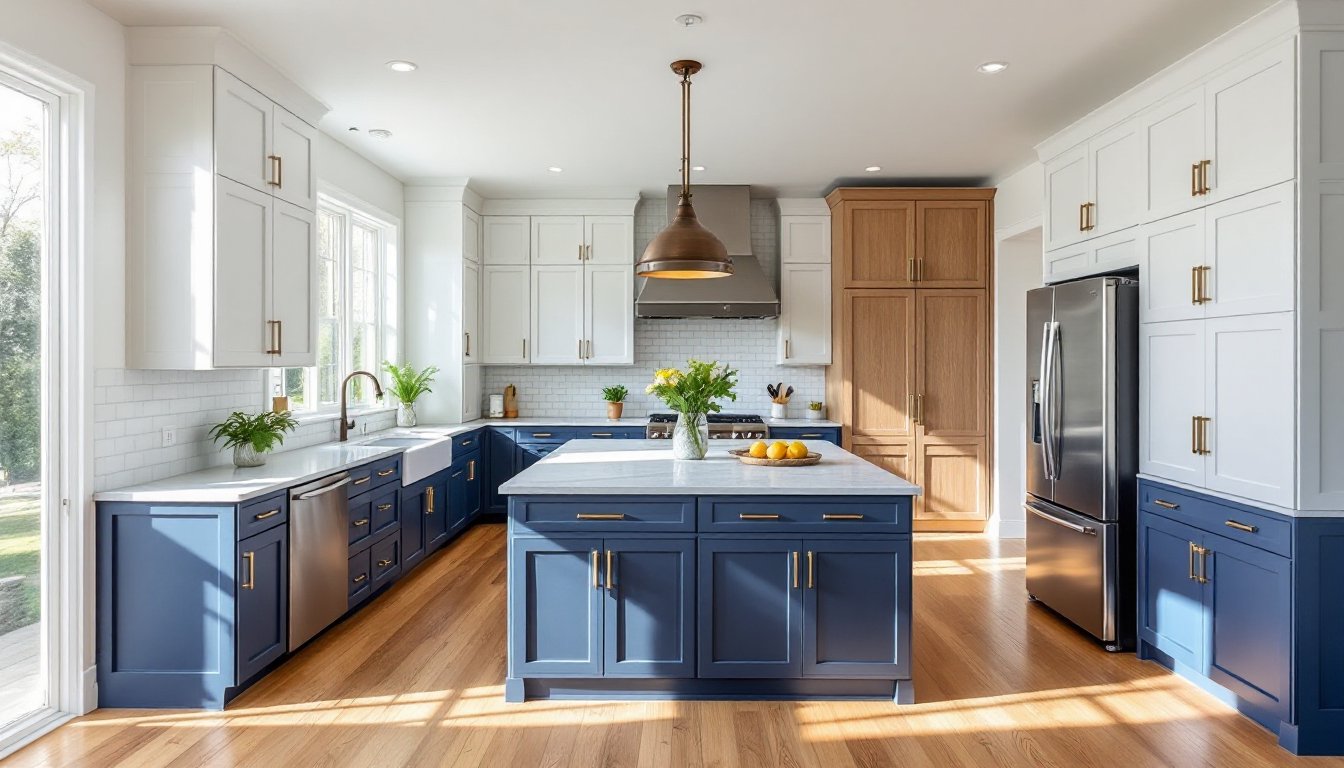
Two-tone cabinets continue to dominate. Designers pair darker lower cabinets (navy, charcoal, forest green, or black) with lighter uppers (white, cream, light gray) to anchor the space without overwhelming it. This approach also makes small kitchens feel taller by drawing the eye upward. Alternatively, reserve a bold color for the island while keeping perimeter cabinets neutral, a strategy that allows for easier updates down the road.
Warm neutrals are replacing cool grays. Greige (gray-beige), soft taupe, and mushroom tones add warmth without the yellow cast of traditional beige. These colors pair well with brass, aged bronze, or matte black hardware and complement natural wood flooring and butcher-block countertops.
Deep, saturated colors like terracotta, olive green, and slate blue bring personality to kitchens that might otherwise feel too neutral. These work best in kitchens with ample natural light or when balanced with white countertops and subway tile backsplashes. Test paint samples on large foam-core boards and view them at different times of day before committing.
Natural wood finishes in walnut, white oak, and rift-cut oak remain popular for contemporary and Scandinavian-style kitchens. Clear-coat or matte topcoats preserve the grain without adding gloss. Wood tones warm up spaces dominated by stainless steel appliances and stone counters.
Matte finishes outsell gloss by a wide margin. Matte paint and lacquers hide fingerprints, don’t show minor scratches as readily, and photograph better under mixed lighting. They also feel more sophisticated and less commercial than high-gloss options.
When selecting color, consider the undertones of flooring, countertops, and wall paint. A greige cabinet can read too pink or too green depending on adjacent materials. Bring samples home and evaluate them under kitchen lighting, not just under the showroom’s fluorescents.